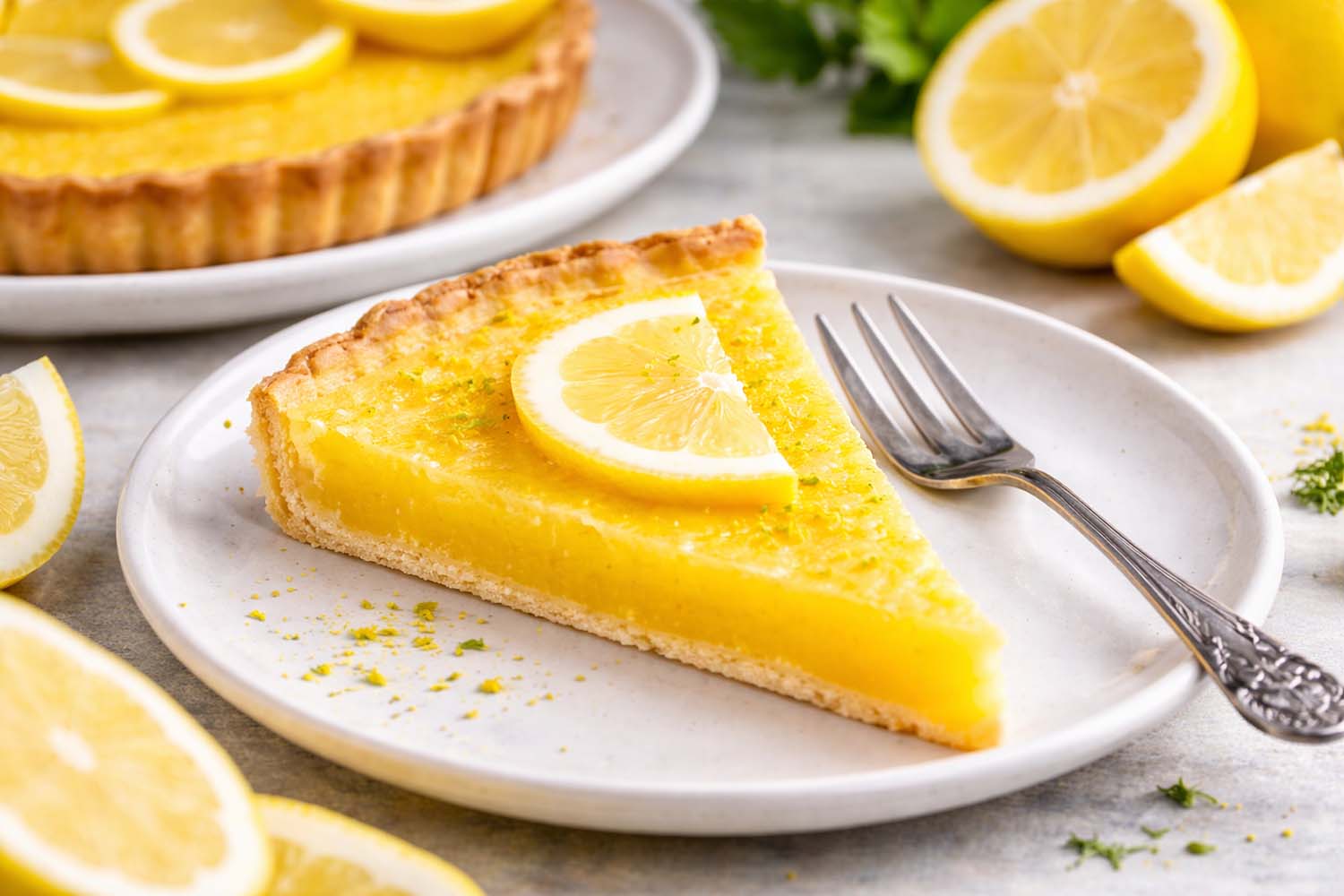
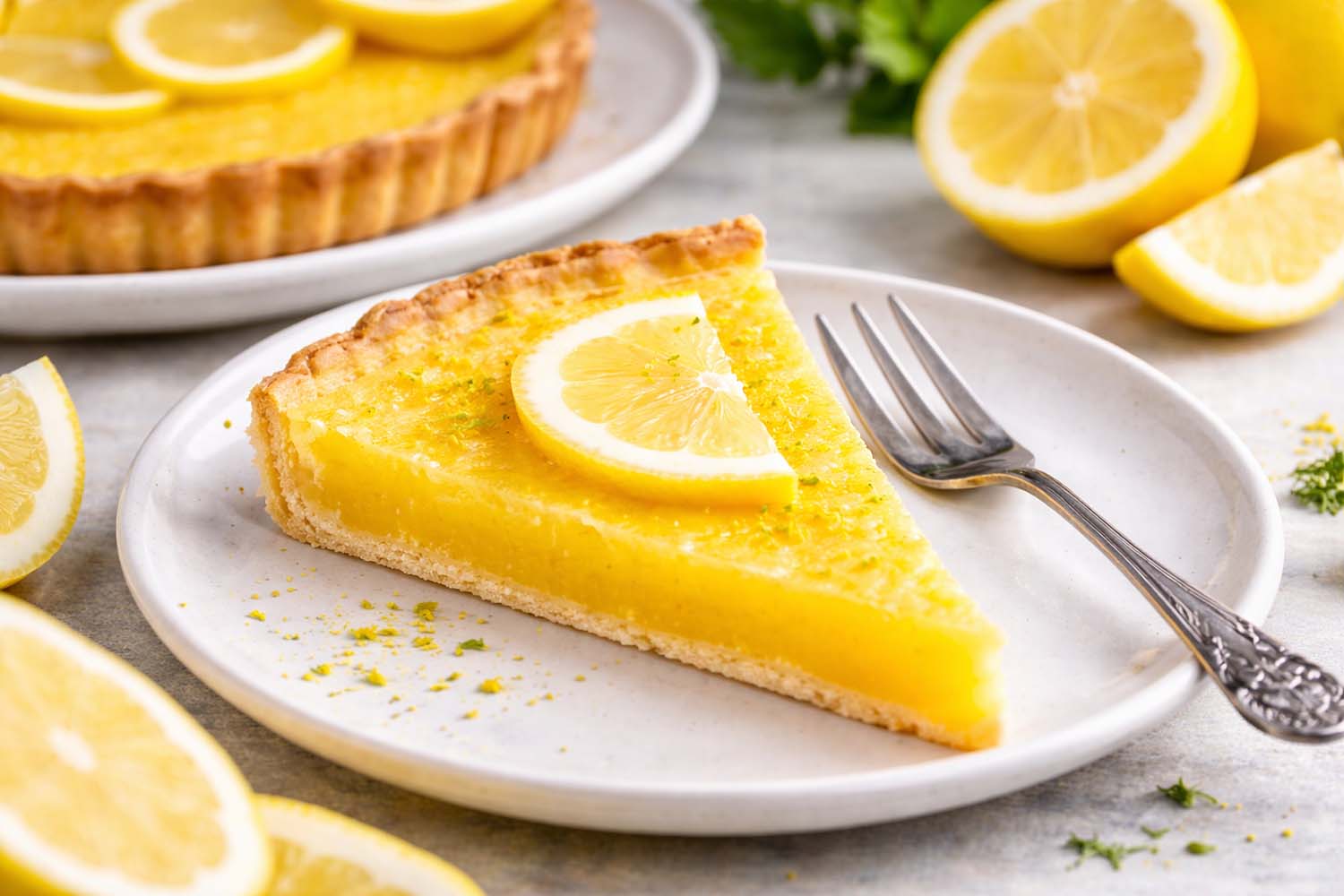
A great lemon tart should stop you in your tracks. The filling has to be silky and smooth, tangy enough to make you pay attention, and just sweet enough to pull you back for another bite. This lemon tart recipe delivers all of that. The filling is a classic stovetop lemon curd made with whole eggs, egg yolks, fresh lemon juice, and real butter, cooked until thick and glossy and poured into a pre-baked tart shell to set in the refrigerator.
Summer is the ideal time to serve this because it is cool, refreshing, and feels elegant without being difficult. It also happens to be one of the best make-ahead desserts you can have in your repertoire. Make it the day before and it is ready when you need it.
⏱ 20 min active
🍋 2 hours chill
🍽 8 servings
📅 Make-ahead friendly
The method: a lemon curd filling is cooked stovetop and poured into a buttery pre-baked tart shell to set in the refrigerator. No baking the filling required.
The Tart Shell: Two Paths
This recipe gives you two equally good options for the tart shell, and neither one is wrong.
Store-Bought Tart or Pie Shell
A prepared tart shell or refrigerated pie crust is a perfectly legitimate choice and one we actively recommend when you want to focus your energy on the filling. Look for a pre-baked 9-inch tart shell, or use an unbaked refrigerated pie crust fitted into a 9-inch tart pan with a removable bottom and blind-baked yourself. The result is every bit as good and the prep time drops significantly.
Make Your Own
If you want to make the crust from scratch, a simple sweet shortcrust pastry works beautifully. The key steps for any homemade tart crust are the same: chill the dough before pressing it into the pan, freeze it for 15 to 20 minutes before blind baking, use pie weights or dried beans to prevent puffing, and bake it fully before adding the filling. A soggy bottom is the enemy of a great tart and the only way to avoid it is a properly blind-baked shell. Allow the baked shell to cool completely before pouring in the lemon curd.
Tip: Whatever crust you choose, make sure it is completely cooled before filling. Pouring warm curd into a warm shell can cause the bottom to soften. Room temperature or fully chilled is the target.
The Ingredients
Use Organic Lemons
Since this recipe calls for both the zest and juice of the lemons, organic is strongly recommended. Conventional lemons are often coated with wax and treated with post-harvest fungicides that concentrate on the skin. When you are zesting the peel directly into your filling, organic lemons eliminate that concern and tend to have a more aromatic, intensely flavored zest as well. You will need approximately 5 lemons for this recipe.
Whole Eggs and Egg Yolks
The combination of 3 whole eggs and 5 egg yolks is intentional. Whole eggs provide structure and set, while the extra yolks add richness, a deeper golden color, and a creamier, silkier texture in the finished curd. Using only whole eggs produces a curd that can taste slightly rubbery and sets too firmly. The yolk-heavy ratio is what gives this filling its characteristic smooth, custard-like quality.
Fresh Lemon Juice Only
Bottled lemon juice will not produce the same result. Fresh juice has a brightness and complexity that bottled juice loses during processing. Squeeze and strain your lemons just before using them.
The Butter
One full stick of butter, added off the heat one piece at a time, is what transforms a cooked egg-and-lemon mixture into a glossy, velvety curd. Adding the butter gradually and whisking constantly after each piece is the key technique. Rushing this step by adding all the butter at once can cause the curd to break and look greasy rather than smooth.
The Recipe
Tips for the Best Lemon Curd
Whisk Constantly and Do Not Walk Away
Lemon curd goes from perfect to scrambled eggs faster than you expect. Keep the heat at medium-low and whisk without stopping from the moment the pan goes on the burner. If you feel the mixture starting to get ahead of you, pull the pan off the heat for 30 seconds while whisking, then return it. This is not a recipe for multitasking.
How to Know When It Is Done
Two reliable tests. First, dip a wooden spoon or spatula into the curd and draw a line through it with your finger. If the line holds clean without the curd running back together, it is ready. Second and more reliable: an instant-read thermometer reading of 170°F in the center of the pan. At that temperature the eggs are fully cooked and the curd will set properly in the refrigerator. Below 165°F and the curd may stay too loose. Above 180°F and you risk a grainy, curdled texture.
Add the Butter Slowly
Off the heat, add the butter one piece at a time, whisking each piece fully into the curd before adding the next. This emulsification step is what gives lemon curd its glossy, velvety texture. Add all the butter at once and the fat separates rather than incorporating, leaving a greasy surface rather than a smooth one.
Strain for a Silkier Result
After adding the butter, pour the finished curd through a fine-mesh strainer into the tart shell. This removes any bits of cooked egg white or zest fibers and produces an exceptionally smooth filling. This step is optional but worth doing for a special occasion tart.
Zest Before You Juice
Always zest the lemons before cutting and juicing them. Once a lemon is cut, the zest is much harder to grate cleanly. Zest all five lemons first, then juice them.
Prevent a Skin Forming
If you are not pouring the curd directly into the tart shell immediately after cooking, press a sheet of plastic wrap directly onto the surface of the curd while it is still warm. This prevents the skin that forms when hot curd is exposed to air.
How to Serve and Garnish
The simplest presentation is fresh whipped cream alongside each slice, and it is genuinely the best one. The cool, lightly sweetened cream balances the tartness of the filling perfectly. Here are a few ways to take it further:
See also

Fresh Berries
Raspberries, blueberries, and sliced strawberries are the natural partners for lemon. Arrange a handful across the top of the finished tart before serving, or scatter them around each slice on the plate. The color contrast against the yellow filling is beautiful. Fresh berries also add a complementary tartness that plays well against the sweetness of the curd.
Powdered Sugar
A light dusting of powdered sugar over the top just before serving gives the tart a clean, French bakery look with almost no effort. Sift it through a fine strainer for an even coating.
Candied Lemon Peel
Thin strips of candied lemon peel arranged across the top add texture and a concentrated lemon flavor that reinforces what is already in the filling. They also look striking against the yellow surface of the tart.
Torched Meringue
Pipe or spoon a layer of simple meringue (2 egg whites whisked with ¼ cup sugar until stiff peaks form) across the top of the chilled tart, then toast it with a kitchen torch for a lemon meringue tart variation that is genuinely impressive.
Mint and Citrus Slices
A few thin slices of fresh lemon or lime and a sprig of fresh mint make an elegant, minimal garnish that keeps the citrus theme going without competing with the filling.
For another refreshing lemon dessert that is equally make-ahead friendly, our Greek Yogurt Lemon Cream Pie takes a lighter approach with Greek yogurt and prepared lemon curd in a graham cracker crust. And for a summer entertaining spread, our Gluten-Free Nectarine Crisp makes a wonderful companion dessert alongside this tart.
Make-Ahead, Storage and Freezing
This tart is one of the most genuinely make-ahead-friendly desserts you can serve. The filling actually improves slightly overnight as the flavors settle and the curd firms up for cleaner slicing.
| Method | How Long | Notes |
|---|---|---|
| Refrigerator | Up to 3 days | Cover loosely with plastic wrap. The curd may begin to soften the crust after day 2. |
| Curd only (no shell) | Up to 1 week | Store in a sealed jar in the fridge with plastic wrap pressed to the surface. Fill the shell the day of serving. |
| Freezer | Up to 1 month | Freeze the assembled tart uncovered until solid, then wrap tightly. Thaw overnight in the refrigerator. The crust texture may soften slightly. |
| Best make-ahead plan | 1 day ahead | Make the curd and fill the shell the day before. Refrigerate overnight. The filling sets firmer and slices more cleanly after a full overnight chill. |
Entertaining tip: The lemon curd can be made up to a week ahead and stored in a sealed jar in the refrigerator. Bake or buy your tart shell the day before serving, fill it with the curd, and refrigerate overnight. The day of your dinner party the dessert is already done.
Frequently Asked Questions
Why did my lemon curd curdle?
Curdling happens when the eggs cook too quickly from heat that is too high. Keep the burner at medium-low throughout and whisk without stopping. If you see the curd starting to look lumpy or grainy, pull it off the heat immediately and whisk vigorously. Straining through a fine-mesh sieve after cooking can save a slightly curdled curd by removing the overcooked bits.
Why is my lemon curd still runny after refrigerating?
The curd was most likely undercooked. It needs to reach at least 170°F and pass the spoon test before you take it off the heat. A curd that looks thick enough in the pan will thin out again as it cools slightly before setting. If the curd is genuinely too runny after 2 hours in the refrigerator, you can carefully return it to a saucepan and cook it a few more minutes, then refill the tart shell and chill again.
Can I make this without a tart pan?
Yes. A standard 9-inch pie dish works well and produces a slightly deeper filling. The look is more rustic than formal but the result tastes identical. A springform pan is another option if you want clean sides.
Can I use bottled lemon juice?
Fresh lemon juice is strongly recommended and makes a meaningful difference in flavor. Bottled juice has a duller, slightly bitter taste that is noticeable in a filling where lemon is the only flavor. For a recipe where so few ingredients carry so much weight, fresh is worth the extra few minutes.
Why does the recipe use both whole eggs and egg yolks?
Whole eggs provide structure and help the curd set firmly. The extra yolks add fat and richness that makes the texture silky and creamy rather than rubbery. The yolk-heavy ratio is what gives this filling its custard-like quality rather than the firmer, bouncier texture of a curd made with whole eggs only.
Do I need a microplane zester?
A microplane produces the finest, most aromatic zest and is the best tool for the job. If you do not have one, a fine grater works well. The vegetable peeler and food processor method described in the recipe also works but produces a slightly coarser result. Whatever you use, zest only the yellow part of the skin. The white pith underneath is bitter.
Can I reduce the sugar?
You can reduce it by up to 2 tablespoons without significantly affecting the texture. Beyond that, the curd may not set as firmly since sugar contributes to structure alongside the eggs. The recipe as written is intentionally not overly sweet, so the lemon tang comes through clearly.
How do I get clean slices?
Chill the tart for a full 2 hours minimum, and overnight is even better. Use a thin sharp knife wiped clean between each cut. Running the knife briefly under warm water before slicing also helps it move through the set curd cleanly.
More From Better Living
Made this tart? Leave a star rating and a comment below. It helps other readers find it and we love hearing how it turned out.
Better Living may earn commissions through affiliate links and may occasionally feature sponsored or partner content. If you make a purchase through our links, we may receive a small commission at no cost to you.