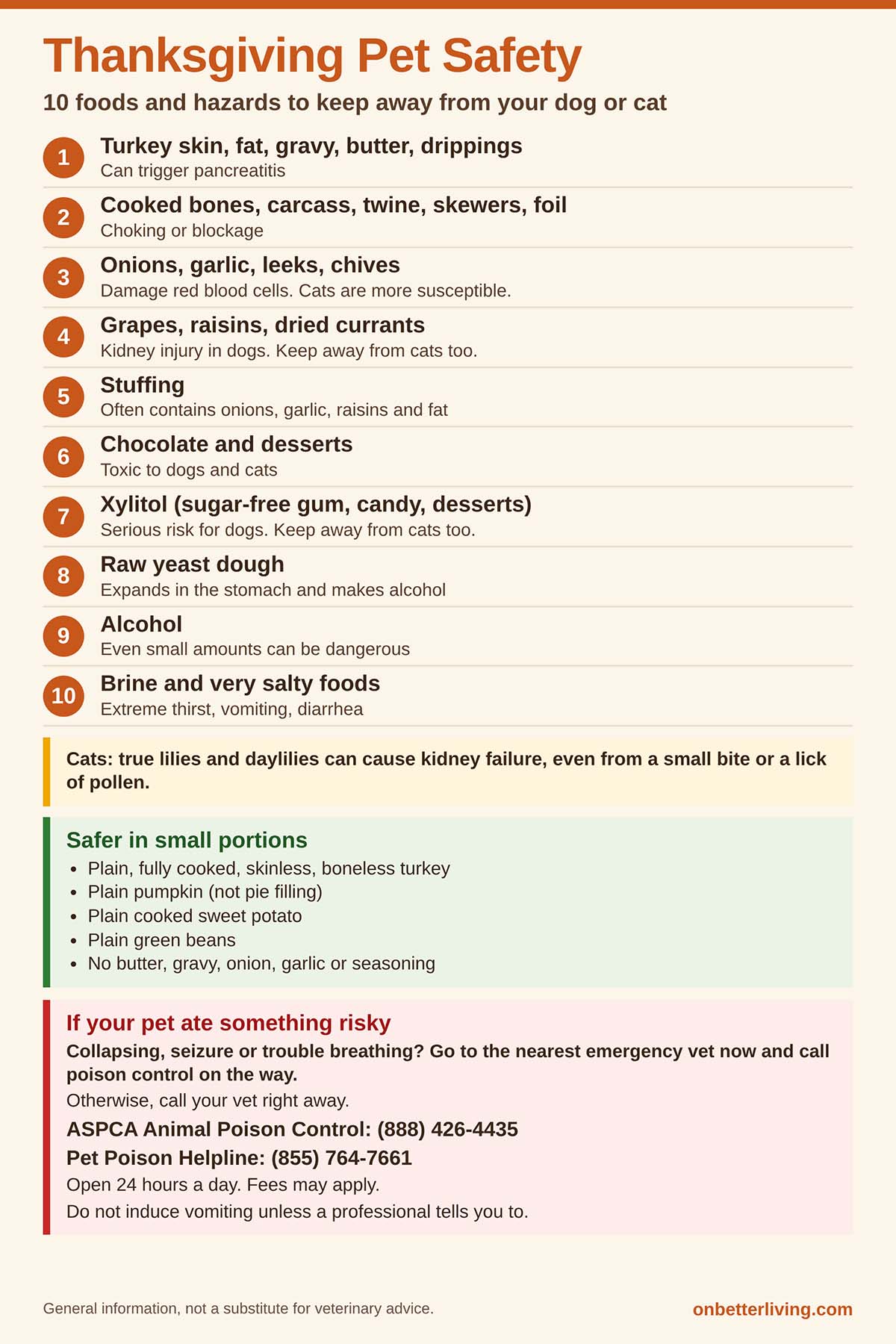
Thanksgiving foods you should never give your dog or cat include turkey skin and gravy, cooked bones, onion-filled stuffing, chocolate desserts and raw yeast dough. Some hazards are species-specific: grapes and raisins can cause kidney injury in dogs, and xylitol can cause dangerously low blood sugar and liver damage in dogs. U.S. Thanksgiving falls on Thursday, November 26, 2026. Before guests arrive, secure food and trash, put bags and medications behind closed doors, and ask everyone not to share table scraps. If your pet eats something potentially harmful, contact your veterinarian or animal poison control promptly, even if your pet seems fine, according to LSU School of Veterinary Medicine.
If your pet already ate something risky: if your pet is collapsing, having a seizure or struggling to breathe, go to the nearest veterinary emergency clinic right away. You can call Pet Poison Helpline on the way, per its Thanksgiving guidance. Otherwise, call your veterinarian or an emergency clinic. Animal poison control is open 24 hours a day: ASPCA Animal Poison Control at (888) 426-4435 or Pet Poison Helpline at (855) 764-7661. Fees may apply. Do not try to induce vomiting unless a professional tells you to.
Dogs vs. cats: the key differences
| Hazard | What to know |
|---|---|
| Onions, garlic, leeks and chives | Can damage red blood cells and cause anemia in dogs and cats. ASPCA says cats are more susceptible, though dogs are also at risk. |
| Grapes, raisins and dried currants | Kidney injury is documented in dogs. Cornell Feline Health Center also lists grapes and raisins as foods cats should not have, but the kidney-injury evidence in these sources is for dogs. |
| Xylitol | A serious poisoning risk in dogs. The ASPCA says it does not cause serious problems in cats, and Pet Poison Helpline says cats are not expected to have the same concerns and no cases have been reported. Keep sugar-free products away from all pets anyway. |
| Chocolate | Toxic to dogs and cats, and darker chocolate is more dangerous, according to AAHA. |
| Raw yeast dough | Can expand in the stomach and produce alcohol, a risk for dogs and cats. |
| True lilies and daylilies | A kidney-failure hazard for cats, even from a small bite or a lick of pollen, per Pet Poison Helpline. |
10 Thanksgiving foods and kitchen hazards to keep away from your dog or cat
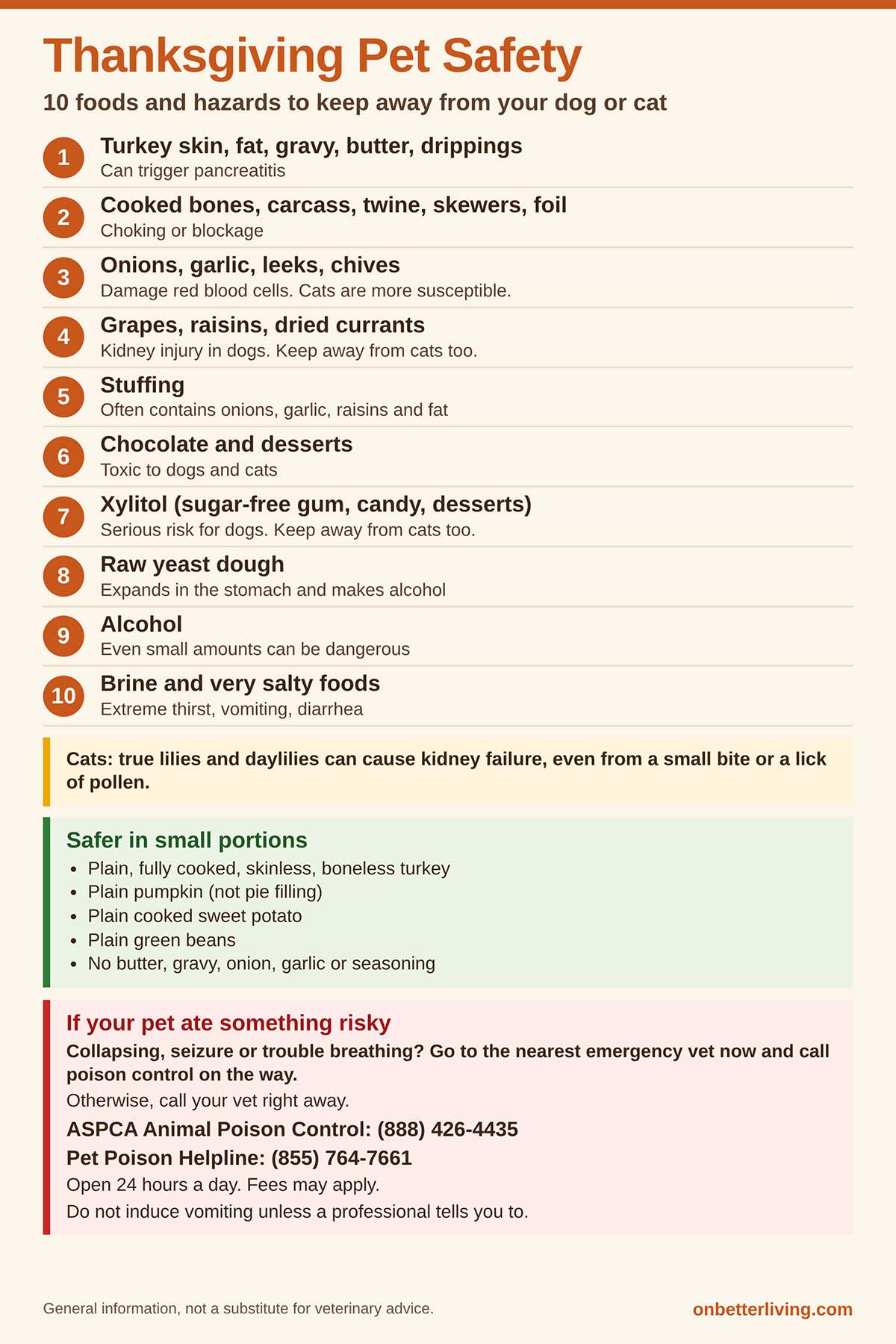
1Turkey skin, fat, gravy, butter and drippings
Rich, fatty scraps are a Thanksgiving hazard because even a small serving can be hard for pets to digest and may trigger pancreatitis. The American Veterinary Medical Association (AVMA) lists gravy, sauces, dressing and meat or poultry fat and skin. Pet Poison Helpline adds butter, bacon and pan drippings and says the signs include vomiting, diarrhea, loss of appetite and belly pain. Kansas State University veterinarian Susan Nelson says gravy, dark meat, ham, butter and meat drippings can lead to stomach upset and, in some cases, fatal pancreatitis.
💡 Our practical tip: put skin and drippings straight into a sealed bag in a closed container, not an open kitchen trash can.
2Cooked bones, the carcass, twine, skewers and foil
Cooked poultry bones can splinter and damage the digestive tract, cause choking or block the intestines, according to the AVMA. Pet Poison Helpline also lists turkey twine, skewers, corn cobs and foil, which can lodge in the stomach or intestines. Signs of a blockage include vomiting, straining, low energy and refusing food. The AVMA says to seal turkey carcasses and bones in a tightly secured bag and put it in a closed container outdoors or behind a securely closed door.
💡 Our practical tip: take the trash out right after dinner, and toss the twine, skewers and foil with it.
3Onions, garlic, leeks and chives
These are in more dishes than most people realize. Pet Poison Helpline says they are common in stuffing, gravy and green bean casserole, and that they can damage red blood cells and cause anemia, with signs that may be delayed. ASPCA says cats are more susceptible than dogs, though dogs are also at risk depending on the amount.
Our practical tip: a pet that licks a casserole dish may eat more than you think, so keep dirty dishes out of reach too.
4Grapes, raisins and dried currants
Pet Poison Helpline says grapes, raisins and currants can cause kidney injury in dogs, and warns to check stuffing, salads, breads and fruitcake. LSU School of Veterinary Medicine lists grapes and raisins as a cause of acute kidney failure in dogs. The Cornell Feline Health Center lists grapes and raisins among foods cats should not have, so keep them away from both dogs and cats. The kidney-injury evidence in these sources is specific to dogs.
💡 Our practical tip: the currants in baking are usually dried Zante currants, which are small dried grapes, so treat them like raisins.
5Stuffing and dressing
Stuffing can combine several hazards in one serving, including onions, garlic, raisins and fatty ingredients, and once mixed together they are hard to spot. Pet Poison Helpline says it is generally not safe for pets for exactly that reason. Pet Poison Helpline’s holiday danger list adds that eating onions and raisins together can be much more dangerous, because each affects the body differently.
💡 Our practical tip: keep stuffing off your pet’s menu. Offer a small piece of fully cooked, plain, skinless, boneless turkey or their usual treat instead.
6Chocolate and holiday desserts
Chocolate is toxic to dogs and cats, and darker chocolate is more dangerous, according to AAHA. Pet Poison Helpline’s holiday danger list says the helpline gets more calls about chocolate than any other toxin. The signs can include vomiting, diarrhea, restlessness, a fast heart rate, tremors and seizures, and that includes chocolate baked into desserts. The AVMA also says pies may contain ingredients that are toxic to animals.
💡 Our practical tip: keep desserts in a closed cabinet or behind a closed door, not just on a counter. Pet Poison Helpline says many dogs and cats can reach or climb onto counters.
7Xylitol in sugar-free treats
Xylitol is a sugar substitute in some sugar-free gum, candy, desserts, pudding and peanut butters. In dogs, Pet Poison Helpline says it can cause a dangerous drop in blood sugar and liver damage, and Pet Poison Helpline says even a piece of gum can be harmful depending on the dog’s size. For cats, The ASPCA says xylitol does not cause serious problems, and Pet Poison Helpline says there are no reported cases in cats. The AVMA and Cornell Feline Health Center still include xylitol in their warnings, so keep sugar-free products away from both pets and call your veterinarian or poison control if either may have eaten some.
💡 Our practical tip: keep purses and coat pockets, where gum often hides, behind a closed door.
8Raw yeast bread dough
Unbaked bread or roll dough containing yeast can expand in a pet’s stomach and produce alcohol as it ferments, creating potentially life-threatening complications. Pet Poison Helpline says it can cause bloating and a possibly life-threatening twisting of the stomach, and LSU School of Veterinary Medicine lists unbaked yeast dough as a Thanksgiving hazard. Baked rolls are a different matter. The concern is dough that is still rising.
💡 Our practical tip: let dough rise in a turned-off oven or microwave with the door closed, as Pet Poison Helpline suggests, and tape a note on the oven so no one preheats it with dough inside.
9Alcohol, including rum-soaked desserts
Pet Poison Helpline lists alcohol in drinks and rum-soaked desserts as a cause of trouble walking, low blood sugar, low body temperature and breathing difficulty. AAHA says even small amounts can be dangerous, and Pet Poison Helpline notes the amount that can cause poisoning varies by pet and product.
💡 Our practical tip: keep drinks off low tables and coffee tables, and ask guests not to set a glass on the floor.
10Brine and very salty foods
Pet Poison Helpline says brine is heavily salted water that many pets will happily lap up. Too much salt can cause extreme thirst, frequent urination, vomiting and diarrhea, and severe cases can affect the brain. The ASPCA also warns that high-sodium bouillon cubes can cause stomach problems and seizures.
💡 Our practical tip: pour out brine as soon as you take the turkey out, and do not leave a brining bucket where a pet can reach it.
Not on the plate, but still on the watch list
- Raw turkey and raw egg batter: the ASPCA says both can carry salmonella.
- Nuts: Pet Poison Helpline says most nuts are high in fat, and macadamia nuts can cause weakness and trouble walking in dogs.
- True lilies and daylilies, for cats: Pet Poison Helpline names Lilium and Hemerocallis species, which are common in holiday bouquets, and says even a small bite or a lick of pollen can cause kidney failure in cats. Check any centerpiece or bouquet a guest brings.
- Guests’ medications and bags: Pet Poison Helpline says to store bags and coats behind a closed door, since purses and pockets may hold medications or sugar-free gum.
- Candles and decorations: keep lit candles out of reach. The AVMA says corn cobs, pine cones and gourds used as decorations can cause choking or blockages.
What your dog or cat can have instead
Small portions only, with no skin, bones, butter, gravy, onion, garlic or seasoning:
- Turkey: fully cooked, plain, skinless and boneless. The AVMA says this is generally safe in small portions, and AAHA lists plain cooked white turkey meat. Pet Poison Helpline says every pet is different.
- Pumpkin: plain pumpkin, not pie filling. The AVMA says small pieces of plain pumpkin make a healthy snack.
- Sweet potato: cooked and plain, with no butter, sugar or spices. Kansas State University veterinarian Susan Nelson suggests it, and PetMD says about a tablespoon is plenty for a cat.
- Green beans and other vegetables: plain, with no butter, gravy, onion or garlic. AAHA lists plain green beans and carrots.
- Their regular treats: Pet Poison Helpline suggests offering your pet’s usual treats instead of table food and asking guests to do the same.
See also

For cats, PetMD says treats should be no more than 10 percent of daily food and that onions, garlic, bones and raw meat are unsafe. Check with your veterinarian before adding any new people food, especially for a pet with a health condition.
If your pet eats something it should not
- If your pet is collapsing, having a seizure or struggling to breathe, go to the nearest veterinary emergency clinic immediately and call poison control on the way.
- Otherwise, call your veterinarian or a local emergency clinic right away. LSU School of Veterinary Medicine says not to wait for symptoms, and some signs, like those from onions and garlic, can be delayed.
- Keep the package, label or recipe, and note how much your pet ate and when, which helps Pet Poison Helpline assess the risk.
- Call ASPCA Animal Poison Control at (888) 426-4435 or Pet Poison Helpline at (855) 764-7661. Both are open 24 hours a day. The ASPCA says a consultation fee may apply, and Pet Poison Helpline lists a one-time $99 fee per incident that covers follow-up consultations.
- Do not induce vomiting or try home remedies unless a veterinarian or poison control professional tells you to.
Watch for vomiting, diarrhea, lethargy, agitation, tremors and seizures. This article is general information, not a substitute for veterinary advice.
Hosting? Our Thanksgiving home cleaning checklist covers the rest of the house. For the people food, see how long cooked turkey can sit out. That leftover guidance is for human meals, not for feeding pets.
Thanksgiving pet safety: your questions, answered
Can dogs eat turkey on Thanksgiving?
Plain, fully cooked, boneless, skinless turkey in small portions is generally safe, according to the AVMA. Skin, bones, gravy and seasonings are not.
Can cats eat Thanksgiving turkey?
A very small amount of plain, cooked, skinless turkey is usually fine, per PetMD. Skip the skin, bones, gravy and any seasoning that may contain onion or garlic.
What happens if my dog eats turkey skin or gravy?
The main concern is pancreatitis, which Pet Poison Helpline says can cause vomiting, diarrhea, loss of appetite and belly pain. Call your veterinarian if you see these signs or if your dog ate a lot.
Is xylitol dangerous to cats?
The ASPCA says xylitol does not cause serious problems in cats, and Pet Poison Helpline says there are no reported cases in cats. It is a serious risk for dogs, so keep sugar-free products away from all pets and call your veterinarian if you are unsure.
Can dogs and cats eat pumpkin pie?
Pie is risky because the AVMA says pumpkin pie and other pies may contain ingredients that are toxic to animals. Small pieces of plain pumpkin are a safer choice.
Is it safe to make my pet vomit?
No, not unless a veterinarian or poison control professional tells you to. Pet Poison Helpline and LSU both warn against inducing vomiting at home without guidance.
What is the Thanksgiving pet poison hotline number?
The ASPCA Animal Poison Control number is (888) 426-4435, and the Pet Poison Helpline number is (855) 764-7661. Both are open 24 hours a day, and fees may apply.
The bottom line
The foods that cause the most trouble at Thanksgiving are rich, seasoned and sweet, and they hide in dishes that look harmless. Offer a few bites of plain turkey or pumpkin, ask guests not to feed your pet, secure the trash, and keep the poison control numbers handy. If something goes wrong, call early.

Better Living may earn commissions through affiliate links and may occasionally feature sponsored or partner content. If you make a purchase through our links, we may receive a small commission at no cost to you.