You made a double batch for the holiday cookie swap, or a tub of store-bought dough has been waiting in the fridge since the last cookie craving. Now the date is close, or past, and the question is whether the dough is still good. Because cookie dough is raw, how long it has been stored matters, and so does baking it.
Does cookie dough go bad?
For a complete pantry and fridge reference, see our Food Storage Guide. The ingredients have their own shelf lives too: see whether flour, butter, eggs and baking soda go bad.
📋 Cookie Dough Shelf Life: At a Glance
| Dough, refrigerator | 3 to 4 days at 35 to 40°F, per a dough row in Colorado State University Extension’s table. It doesn’t say homemade or store-bought |
| Store-bought dough, refrigerator | Use or freeze by the date on the package. Toll House doesn’t recommend using its products past the date |
| Freezer | 3 months for best quality at 0°F, per Illinois Extension (unbaked cookie dough) and Colorado State. Toll House says its refrigerated bar dough can be frozen up to 2 months, if frozen before the date |
| Left on the counter | Discard after 2 hours (1 hour above 90°F), per USDA’s handbook rule for perishable food |
| Raw dough | Don’t eat ordinary dough made for baking. FDA and CDC say only baking or cooking kills the germs in flour and raw eggs |
| Edible cookie dough | CDC says store-bought edible dough uses heat-treated flour and pasteurized eggs, or no eggs. Pillsbury labels one refrigerated sugar cookie dough Safe to Eat Raw. Read the label |
| Freezer temperature | 0°F or lower. Illinois Extension says properly handled food at 0°F is safe as long as it hasn’t thawed, and USDA says microbes can become active again after thawing |
Key Takeaways
- Colorado State University Extension’s storage table lists dough at 3 to 4 days in the refrigerator but doesn’t say homemade or store-bought, so we use it as a conservative reference. King Arthur Baking says basic drop and roll-out dough keeps up to five days, as a baking-quality limit.
- Store-bought dough has a Use or Freeze By date. Toll House says to freeze before the date and doesn’t recommend using products past it.
- In the freezer, extension tables give 3 months for dough, and Illinois Extension labels its figure as top quality. Toll House gives 2 months for its refrigerated bar dough.
- Properly handled dough kept frozen at 0°F is safe, but USDA says microbes become active again after thawing. Freezer time limits are about flavor and texture, and freezing doesn’t make raw dough safe to eat.
- Dough left out more than 2 hours (1 hour above 90°F) should be discarded under USDA’s rule for perishable food.
- Raw dough carries risk from both flour and eggs. FDA and CDC say germs in flour are killed only when it is baked or cooked.
- Dough that looks fine isn’t safe to eat raw unless it is labeled that way. USDA says you can’t see, smell or taste the germs that cause illness.
- We don’t suggest tasting dough to check it. FDA and Toll House both say not to eat or taste raw dough.
What This Page Covers
This page covers unbaked cookie dough, both homemade and store-bought refrigerated dough, using USDA, FDA, CDC, three university extension pages and Toll House’s own guidance. It focuses on unbaked dough, and it also explains how edible cookie dough, sold to be eaten raw, differs. It doesn’t cover baked cookies or bread dough. Colorado State’s table describes its refrigerator limits as safe time limits and its freezer limits as flavor and texture guides. We note where a figure is our own suggestion.
Does Cookie Dough Go Bad?
Yes. USDA’s food product dating page says that a product should still be safe and wholesome if handled properly until the time spoilage is evident. It doesn’t mention refrigerated dough. Cookie dough is also raw, with eggs, butter and flour, so we’d treat the storage times below as limits rather than targets.
The table below sums up the times we found, and where each comes from.
| Where it is | How long | Source |
|---|---|---|
| Dough, refrigerator | 3 to 4 days at 35 to 40°F | Colorado State University Extension (a row labeled dough) |
| Store-bought dough, refrigerator | Until the date on the package | Toll House (Use or Freeze By) and Pillsbury (use-by) |
| Dough in the freezer | 3 months for best quality at 0°F | Illinois Extension (unbaked cookie dough) and Colorado State |
| Store-bought refrigerated dough, freezer | Up to 2 months | Toll House (if frozen before the date) and Pillsbury |
| Dough on the counter | 2 hours (1 hour above 90°F) | USDA Kitchen Companion handbook |
How Long Does Cookie Dough Last in the Fridge?
Colorado State University Extension’s storage table lists a row labeled “dough” in its cookies section at 3 to 4 days in the refrigerator. The row doesn’t say “unbaked” or “homemade”, and we read it as cookie dough because it sits in the cookies block. The table’s introduction calls its refrigerator figures short but safe time limits, so we use it as a conservative reference for homemade dough. The page was published in March 2000 and reviewed in June 2012. It doesn’t separate doughs with eggs from doughs without, and we found no other USDA or extension figure for refrigerated cookie dough.
Baking sources give a wider range. King Arthur Baking says basic drop or roll-out cookie dough can be refrigerated for up to five days. After five days it says the dough takes on odors and flavors from the fridge and can oxidize, turning a grayish color.
America’s Test Kitchen’s own test found dough made with baking soda was best within two days, while dough with baking powder or no leavener held up to seven days. Those are baking-quality results, not safety limits, and neither page cites USDA or FDA.
We used the extension table for the food-safety figure. Because most cookie dough contains raw flour and often raw eggs, we’d stay at the conservative end. Keep the refrigerator at 40°F or below. The Colorado State page says to check it with a thermometer and keep it between 35 and 40°F.
Chilling is a baking tip as well as a storage step. Toll House says the best way to avoid sticky dough is to keep it well chilled before you use it. That is a quality point, not a safety limit.
Does Store-Bought Cookie Dough Expire?
Yes, it carries a date. Toll House says each package of its refrigerated cookie dough is labeled with a “Use or Freeze By” date, stamped in ink on the side of the wrapper. It says it doesn’t recommend using its products beyond the date on the package, and encourages replacing older product with new product once the date passes.
USDA’s dating page explains the wording. It says “Freeze-By” indicates when a product should be frozen to maintain peak quality, and that “Use-By” is the last date recommended for use at peak quality. It adds that dates are not an indicator of a product’s safety.
Other brands print their own dates and wording, so follow the package. Pillsbury’s page for its Ready to Bake Refrigerated Sugar Cookie Dough says to refrigerate the dough up to the use-by date, or freeze it for up to 2 months for longer storage. That page covers one product, so check the package of any other dough.
Can You Use Cookie Dough After the Expiration Date?
The maker we read says it doesn’t recommend it. USDA’s general rule is that a product should still be safe if handled properly until spoilage is evident, but its page doesn’t mention refrigerated dough.
Because cookie dough is a raw refrigerated product, our own suggestion is to bake it or freeze it by the date. Once the date passes, we’d throw it out rather than rely on appearance or smell. That is a conservative call, not a USDA rule.
We don’t suggest tasting dough to decide. FDA says not to eat or taste raw dough, and USDA says you can’t see, smell or taste the germs that make people sick.
Does Cookie Dough Need to Be Refrigerated?
Yes. Refrigerate homemade dough, and follow the package for store-bought dough. CDC says to follow label directions to refrigerate products containing raw dough or eggs until they are baked or cooked. Toll House sells its refrigerated dough with a Use or Freeze By date.
USDA’s handbook says to refrigerate perishable food within 2 hours, or within 1 hour above 90°F. Edible cookie dough is a different product, so follow its own label.
Dough that is chilled overnight before baking is fine within the storage limits above. Toll House says well-chilled dough is easier to handle.
How Long Can Cookie Dough Sit Out?
USDA’s Kitchen Companion handbook says perishable food should not be left out for more than 2 hours at room temperature. It says that if it has been more than 2 hours, or 1 hour above 90°F, you should discard the food. It also says eggs should not be unrefrigerated for more than 2 hours.
USDA’s rule is for perishable food in general and doesn’t name cookie dough. Dough with eggs and butter fits that description, so we’d apply it. Dough left out overnight should go in the trash.
Baking kills germs in properly stored dough, but the sources we read give no baking exception to USDA’s discard rule. We wouldn’t use baking or freezing to salvage dough that was left out too long or shows spoilage.
If you soften dough to scoop it, scoop what you need and return the rest to the refrigerator within that window.
How Long Does Cookie Dough Last in the Freezer?
Illinois Extension lists unbaked cookie dough at 3 months in the freezer, as its recommended storage time for top quality at 0°F. Colorado State’s dough row also lists 3 months. Toll House gives a shorter figure for its refrigerated bar dough, up to 2 months, if it goes into the freezer before the Use or Freeze By date.
Illinois Extension says properly handled food stored at 0°F is safe as long as it hasn’t thawed. It also says storing food a long time is not dangerous, but flavors and textures can deteriorate. Colorado State says the time limits for frozen foods are to maintain flavor and texture.
So the freezer times are about quality. We’d use frozen dough within them, since flavors and textures can deteriorate with longer storage.
USDA’s Freezing and Food Safety page says freezing to 0°F inactivates microbes in food, and that once thawed they can become active again, so thawed items should be handled like any perishable food. Freezing doesn’t make raw dough safe to eat, and it doesn’t undo mishandling before the dough was frozen.
The handbook says to date all freezer packages, which is easy to skip with a pile of dough balls and worth doing.
How Do You Freeze Cookie Dough?
The sources we read give brief instructions. Colorado State says to use freezer wrap, freezer-quality plastic bags or aluminum foil to reduce dehydration and quality loss. USDA’s Freezing and Food Safety page says proper packaging helps maintain quality and prevent freezer burn.
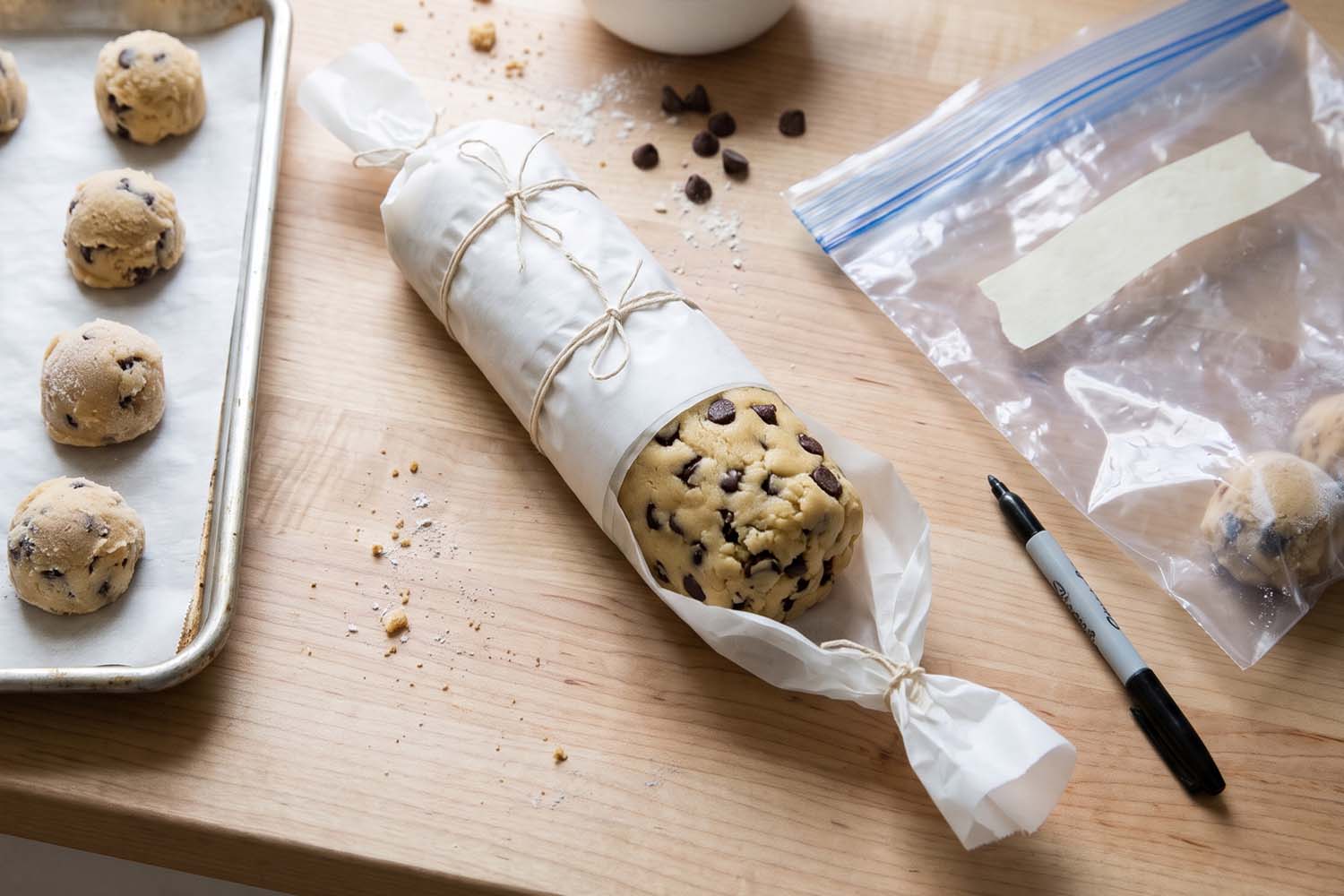
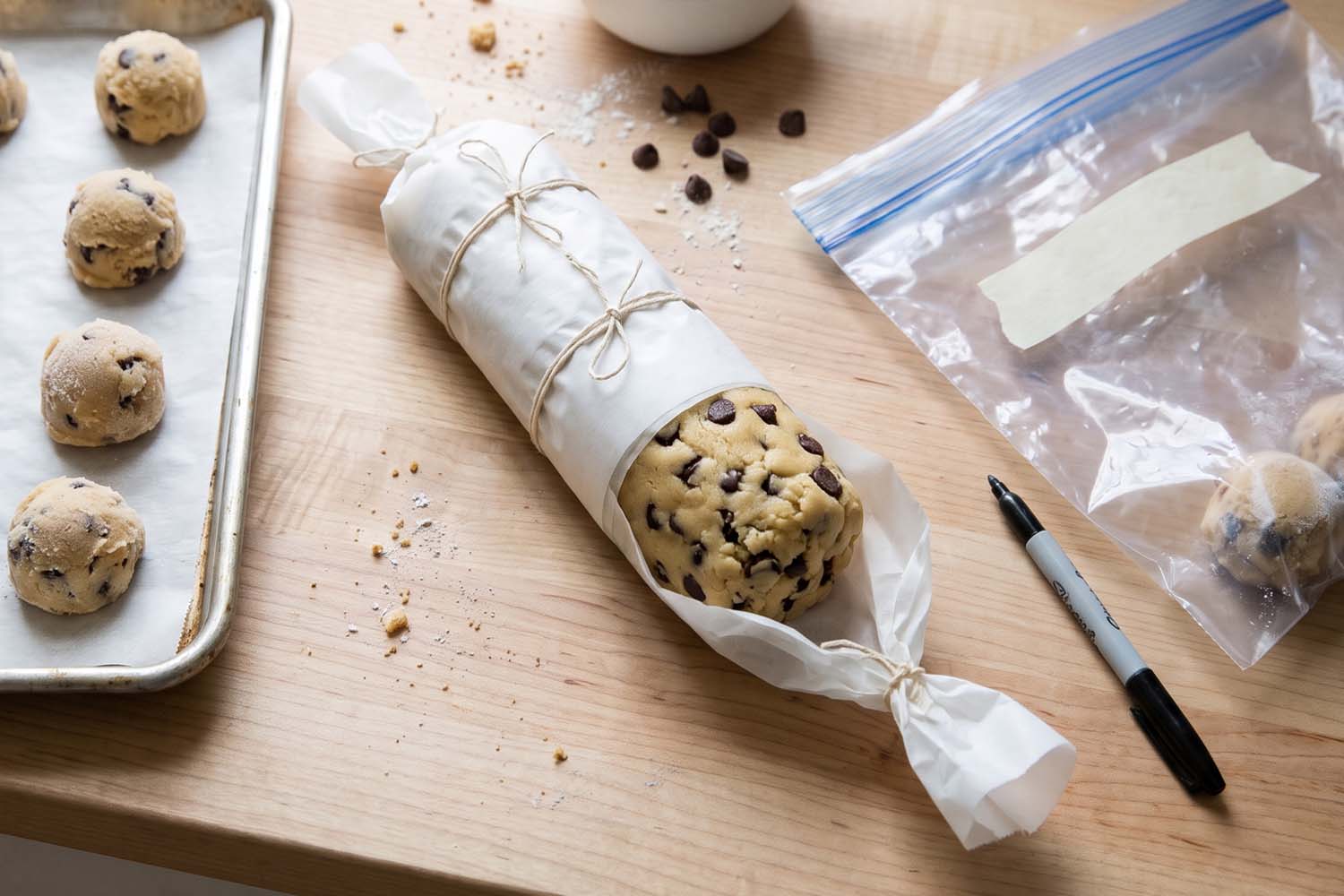
Our own suggestions: scoop or slice the dough first, freeze the pieces on a tray, then bag them so they don’t stick together. Press out the air, and write the date and the baking temperature on the bag.
If you’re using store-bought dough, freeze it before the Use or Freeze By date, and don’t wait for the last day.
Can You Bake Cookie Dough Straight From the Freezer?
Toll House’s refrigerated dough tips say that if you start with frozen dough, you should allow extra baking time so the centers are done. Its chocolate chip bar dough page says frozen dough can be baked in a preheated oven by adding 1 to 2 minutes of bake time.
Directions vary by dough, so follow the recipe or package. The sources we read give no thawing time. Toll House describes cookies as ready when they are golden brown around the edges.
Can You Refreeze Cookie Dough?
The sources we read don’t address refreezing cookie dough. USDA’s Freezing and Food Safety page says that food thawed in the refrigerator is safe to refreeze without cooking, though there may be a loss of quality from moisture lost through thawing. It also says not to refreeze foods left outside the refrigerator longer than 2 hours (1 hour above 90°F).
Applied to dough, that means dough thawed in a refrigerator at 40°F or below can generally go back in the freezer, with some quality loss. USDA also says to handle thawed items as you would any perishable food, so we wouldn’t hold it long first. Dough thawed on the counter for more than 2 hours should be discarded.
By our own suggestion, if you won’t bake the whole batch, bake it and freeze the baked cookies. Colorado State lists baked cookies at 2 to 3 weeks in the refrigerator and 6 to 12 months in the freezer.
How Can You Tell if Cookie Dough Has Gone Bad?
Look and smell first, with a limit. USDA’s handbook says that with spoilage bacteria, food looks or smells funny or bad, so you know to throw it out. It says spoilage bacteria do not usually cause illness.
Mold is a clear sign. USDA’s mold page lists breads and baked goods as discard, because porous foods can be contaminated below the surface and mold roots can be very deep. It doesn’t list cookie dough, so we’d treat moldy dough the same way.
The limit matters most. The handbook says you can’t see, smell or taste the pathogens that cause illness. Dough can look and smell normal and still carry germs from raw flour or eggs, which is why it needs baking. The handbook’s advice is “When in doubt, throw it out.”
Is Raw Cookie Dough Safe to Eat?
Not ordinary dough made for baking. FDA says to stay safe, don’t eat or taste raw flour, dough or batter. It says cooking and baking is what kills bacteria in flour, as well as in raw eggs. Processing raw grains into flour does not kill bacteria.
CDC says most flour is raw, meaning it hasn’t been treated to kill germs such as E. coli and Salmonella. It says germs are killed only when flour is baked or cooked, and that raw and lightly cooked eggs can contain Salmonella.
Penn State Extension notes that many people think the hazard in dough is Salmonella from raw eggs, but that raw flour can also carry harmful bacteria such as E. coli. So removing the eggs doesn’t make raw dough safe to eat.
FDA also says not to let children use raw dough for crafts or play clay, because they may put their hands in their mouths. CDC says to wash hands, bowls, utensils and counters with soap and water after handling raw dough.
What About Edible Cookie Dough?
Edible dough is a different product. CDC says some companies make edible cookie dough and brownie batter that you can find in stores, and that these products are made with heat-treated flour and pasteurized eggs, or no eggs. It says to read the label to make sure the dough is meant to be eaten without baking.
Pillsbury’s page for its refrigerated sugar cookie dough is titled “Safe to Eat Raw” and says to look for the “safe to eat raw” seal. That applies to that product, not to every Pillsbury dough, and the page doesn’t say how the flour is treated.
Storage for those products is set by the package, and we didn’t find a USDA or extension time for them. The same goes for cookie dough ice cream, which CDC says contains dough treated to kill harmful germs. CDC says not to add raw homemade cookie dough to ice cream or to milkshakes.
If you’d rather bake than store, our small-batch white and dark chocolate chip cookies make fewer cookies at once, so there is less dough to store.
What Can You Do With Extra Dough?
If the dough is close to its date, you have three supported options. Bake it and eat the cookies now, freeze the dough before the date, or bake it and freeze the baked cookies for 6 to 12 months, per Colorado State.
Our own suggestion for a holiday cookie swap is to bake on the day and freeze the extra, labeled, instead of holding raw dough in the refrigerator for a week.
Signs and Reasons to Discard Cookie Dough
- Visible mold. USDA lists moldy bread and baked goods as discard, and says mold roots can run deep.
- It looks or smells funny or bad. USDA says that is how spoilage bacteria show up.
- It sat out more than 2 hours (1 hour above 90°F). USDA says to discard perishable food in that case.
- It is past the date on the package. This isn’t a physical sign. Toll House doesn’t recommend using its products past the date, and we’d discard it.
- Homemade dough kept longer than 3 to 4 days. This isn’t a physical sign either. It is Colorado State’s refrigerator limit, and we’d discard dough past it.
We don’t suggest tasting dough to decide. FDA and Toll House say not to eat or taste raw dough, and USDA says you can’t see, smell or taste the pathogens.
Things That Don’t Automatically Mean Trouble
- Dry, grayish spots on frozen dough. USDA says freezer burn does not make food unsafe, merely dry in spots. The sources we read don’t mention frost on dough.
- Dough that is stiff from the refrigerator. Toll House says chilled dough is the goal, because it avoids sticky dough.
- A dough label that reads Freeze By. USDA says that date marks when to freeze for peak quality, not a safety cutoff.
The storage time and the temperature are the test. The look of the dough isn’t.
See also

Quick Cookie Dough Reference
- Dough, refrigerator: 3 to 4 days (Colorado State; its row doesn’t say homemade or store-bought).
- Store-bought, refrigerator: by the Use or Freeze By date.
- Freezer: 3 months (extension tables), 2 months for refrigerated bar dough (Toll House).
- Counter: 2 hours, or 1 hour above 90°F.
- Ordinary raw dough: bake it, don’t eat or taste it.
- Edible dough: follow the label.
- Freezer temperature: 0°F or lower.
| Situation | What to Do |
|---|---|
| Dough, 2 days in the refrigerator | Within Colorado State’s 3 to 4 day limit if kept at 40°F or below and handled properly. Bake as directed, or freeze it. |
| Homemade dough, 6 days in the refrigerator | Discard it. That is past the extension table’s 3 to 4 days, and our own conservative call. |
| Store-bought dough, 2 days before the date | Bake it or freeze it now, before the date on the package. |
| Store-bought dough, a week past the date | Discard it. Toll House doesn’t recommend using products past the date, and we’d discard it too. |
| Dough left on the counter overnight | Discard it. USDA says to discard perishable food left out more than 2 hours. |
| Frozen dough, 2 months old | Within the quality windows (3 months in extension tables, 2 months for Toll House bar dough) if it was handled properly before freezing and kept frozen at 0°F. |
| Frozen dough with gray, dry spots | Freezer burn alone doesn’t make food unsafe, per USDA. Check its storage history, because appearance alone can’t show safety. |
| Dough with mold | Throw it out. USDA says mold on baked goods can run deep. |
| A taste to check the dough | No. FDA and Toll House say not to eat or taste raw dough. |
How We Checked This
In November 2026 we read FDA’s page on flour as a raw food (current as of December 2023) and CDC’s page on raw flour and dough (last reviewed November 24, 2025). We also read a Penn State Extension page on uncooked flour (updated October 13, 2025). We read USDA FSIS’s food product dating page, its mold page (last updated August 22, 2013), its Freezing and Food Safety page and its Kitchen Companion handbook. We read two extension storage tables, from Colorado State University and the University of Illinois. We read Toll House’s baking tips, its refrigerated dough tips and one bar dough product page, and Pillsbury’s page for one refrigerated sugar cookie dough. We also read King Arthur Baking and America’s Test Kitchen pages on refrigerating dough, for baking-quality windows. The 3 to 4 day refrigerator figure comes from one extension table, published in 2000 and reviewed in 2012, whose dough row doesn’t say unbaked, homemade or store-bought. We found no USDA or FDA time for cookie dough. Advice to discard dough past its date or past 3 to 4 days is our own conservative suggestion. Freezer times describe quality, not safety. This article is general information, not a substitute for the package label or USDA guidance.
Cookie Dough Shelf Life FAQ
Does cookie dough go bad?
Yes. Colorado State University Extension’s table lists dough at 3 to 4 days in the refrigerator and 3 months in the freezer, and store-bought dough carries a date, such as Toll House’s Use or Freeze By.
How long does cookie dough last in the fridge?
Colorado State University Extension lists 3 to 4 days for dough at 35 to 40°F, without saying homemade or store-bought. King Arthur Baking gives up to five days for basic drop and roll-out dough, as a baking-quality window. For store-bought dough, go by the date and directions on the package.
How long does cookie dough last in the freezer?
Illinois Extension lists 3 months for unbaked cookie dough as its recommended time for top quality at 0°F, and Colorado State’s dough row also says 3 months. Toll House says up to 2 months for its refrigerated bar dough, if frozen before the date, and Pillsbury says up to 2 months for its refrigerated sugar cookie dough.
Does frozen cookie dough go bad?
Illinois Extension says properly handled food at 0°F is safe as long as it hasn’t thawed, and that storing food a long time is not dangerous but flavors and textures can deteriorate. USDA says microbes can become active again after thawing, so handle thawed dough as perishable.
Can you use cookie dough after the expiration date?
Not as raw dough, expired or not, unless it is labeled safe to eat raw. For baking, Toll House doesn’t recommend using its products past the date, and the sources we read give no number of days past it. USDA says dates aren’t a safety indicator, but its page doesn’t mention dough. We’d discard it, which is our own conservative suggestion.
What does Use or Freeze By mean on cookie dough?
Toll House says it is the date stamped on the wrapper. USDA says a Freeze-By date indicates when a product should be frozen to maintain peak quality, and Pillsbury’s refrigerated sugar cookie dough page uses a use-by date.
Can cookie dough sit out overnight?
No. USDA’s handbook says to discard perishable food left out more than 2 hours, or 1 hour above 90°F. Its rule doesn’t name cookie dough, so this is our application of it, and dough with eggs and butter fits.
How can you tell if cookie dough is bad?
Look for mold and for anything that looks or smells funny or bad, which is how USDA says spoilage bacteria show up. Also check the date and how long it has been stored. USDA says you can’t see, smell or taste the germs that cause illness, and we don’t suggest tasting it.
Why did my cookie dough turn gray?
King Arthur Baking says dough held past five days in the fridge can oxidize, turning a grayish color. It describes this as a baking-quality change, and color alone can’t establish safety. If homemade dough is past the 3 to 4 day window, we’d discard it rather than bake it to rescue it.
Can you get sick from old cookie dough?
Raw dough can make people sick even when fresh, because FDA and CDC say flour and eggs can carry germs. USDA says you can’t see, smell or taste those germs, so go by the limits and bake the dough as directed.
Does cookie dough need to be refrigerated?
Yes for homemade dough. For store-bought dough, follow the package. CDC says to follow label directions to refrigerate products containing raw dough or eggs until they are baked or cooked. Edible cookie dough follows its own label.
Can you leave cookie dough in the fridge for a week?
For homemade dough, a week is past Colorado State’s 3 to 4 days and King Arthur Baking’s five days. The first is a table of safe time limits and the second is a baking-quality window, and we’d bake or freeze the dough sooner. For store-bought dough, go by the date on the package.
Can you refrigerate cookie dough overnight?
Yes. Overnight is within the 3 to 4 day extension limit. Toll House says well-chilled dough is easier to handle, and CDC says to keep raw dough products refrigerated until baked.
Can you freeze cookie dough?
Yes. Illinois Extension lists unbaked cookie dough at 3 months, and Colorado State’s dough row also says 3 months. Toll House says its refrigerated bar dough can be frozen up to 2 months, and Pillsbury says the same for its refrigerated sugar cookie dough.
How do you freeze cookie dough?
Colorado State says to use freezer wrap, freezer-quality plastic bags or aluminum foil to reduce dehydration and quality loss. Our own suggestion is to freeze scooped dough on a tray first, then bag it and date it.
Can you bake cookie dough straight from the freezer, or should you thaw it?
Toll House says to allow extra baking time when you start with frozen dough, and its chocolate chip bar dough page says to add 1 to 2 minutes. Directions vary by dough, so follow the recipe or package. The sources we read give no thawing time.
Can you refreeze cookie dough?
The sources we read don’t address it. USDA says food thawed in the refrigerator is safe to refreeze without cooking, with some quality loss, and that thawed items should be handled as perishable. Don’t refreeze food left out more than 2 hours. We’d keep the refrigerator at 40°F or below.
Is raw cookie dough safe to eat?
Not ordinary dough made for baking. FDA says don’t eat or taste raw flour, dough or batter, and CDC says germs in flour are killed only when it is baked or cooked. Only dough labeled safe to eat raw is made for that.
Is eggless cookie dough safe to eat raw, and does it last longer?
Not unless it is made for that. CDC and Penn State Extension say raw flour can carry germs such as E. coli, so removing the eggs doesn’t remove the flour risk. The sources we read give no separate storage time for eggless dough, so we’d use the same limits.
What about edible cookie dough?
CDC says store-bought edible cookie dough uses heat-treated flour and pasteurized eggs, or no eggs, and to read the label to make sure it is meant to be eaten without baking. Pillsbury labels one refrigerated sugar cookie dough Safe to Eat Raw, and that applies to that product.
Is cookie dough ice cream safe?
CDC says cookie dough ice cream sold in stores contains dough that has been treated to kill harmful germs. It says not to add raw homemade cookie dough to ice cream.
Why is raw cookie dough unsafe?
FDA says most flour is a raw food and processing grain into flour does not kill bacteria. CDC adds that raw and lightly cooked eggs can contain Salmonella.
Does baking kill the germs in cookie dough?
FDA says cooking and baking is what kills bacteria in flour and in raw eggs. Follow the baking time and temperature on the package or recipe, and don’t use baking to rescue dough that was left out too long.
Can kids play with cookie dough?
FDA says not to let children use raw dough for crafts or play clay. They may put their hands in their mouths after handling it.
How long does Pillsbury cookie dough last?
Pillsbury’s page for its refrigerated sugar cookie dough says to refrigerate it up to the use-by date or freeze it for up to 2 months. That page covers one product, so check the package of any other Pillsbury dough.
Further Reading

Better Living may earn commissions through affiliate links and may occasionally feature sponsored or partner content. If you make a purchase through our links, we may receive a small commission at no cost to you.