I was slicing beets for a salad in a white button-down I’d forgotten to change out of, and a single careless cut sent a thin purple line straight across my sleeve. I remember thinking it wasn’t a big deal, since beet juice is just water with color in it, and water washes out. I finished cooking, ate dinner, and tossed the shirt in with the regular laundry that night without a second thought. It came out of the wash with a faint but very much still-there magenta shadow exactly where the splash had landed. Water-soluble, it turns out, is not the same thing as easy to remove.
The Short Answer: Flush the stain from the back with cold water immediately, since speed matters more here than with almost any other stain on this site. Follow with dish soap or a vinegar or lemon juice treatment while it’s still fresh. For anything dried or set, soak in an oxygen bleach solution rather than repeating the same rinse. Never use hot water or the dryer until the stain is fully gone, and don’t assume a normal wash cycle will finish the job just because the pigment is water-soluble.
Why Beet Stains Don’t Behave the Way You’d Expect
Beets get their color from betalains, a pigment family that’s chemically distinct from the tannins in wine and coffee or the anthocyanins in berries, both of which this site has already covered. The defining trait of betalains is that they’re extremely water-soluble, far more so than either of those other pigment families. Most guides treat that as good news, and technically it is. It’s also exactly what makes beet stains deceptive.
Because betalain dissolves so readily, it doesn’t sit on the surface of the fabric the way an oil-based stain does. It gets carried into the porous structure of the fiber almost immediately, the same way water soaks into a napkin. As that moisture evaporates, the pigment stays behind, now concentrated into a smaller, more visible area than the original splash. That’s why a beet stain so often looks worse the next morning than it did the moment it happened, and why “it’s just juice, it’ll wash out” is the wrong instinct.
The Golden Rule: Water-Soluble Doesn’t Mean Harmless. It Means Fast.
Here’s what separates a beet stain from almost everything else in this cluster. Being water-soluble means speed is genuinely your best weapon, more so than with a wine or berry stain, since a fast, thorough cold flush can carry a huge share of the pigment back out before it has time to concentrate into the fiber. But that same solubility means a slow response works against you faster than it would with a less soluble pigment. Every minute the stain sits and dries, more of that pigment is settling into the weave rather than sitting on top of it, waiting to be rinsed away.
Stain Variants: Fresh, Dried, and Cooked-In
Fresh, still wet: This is the easiest case by far. A fast, thorough cold water flush from the back of the fabric handles most of the pigment before it has time to concentrate.
Dried, same day: The water has evaporated and left the pigment behind in a smaller, denser mark. Dish soap or a vinegar treatment still works well here, though it may take more than one pass.
Set or been through a wash cycle already: This is where an oxygen bleach soak earns its place. A regular wash cycle without a targeted treatment first, like the one I ran on my own shirt, often isn’t enough on its own.
How to Get Beet Stains Out of Clothes: 4 Methods Tested
1
The Cold Flush (fresh stains, every fabric)
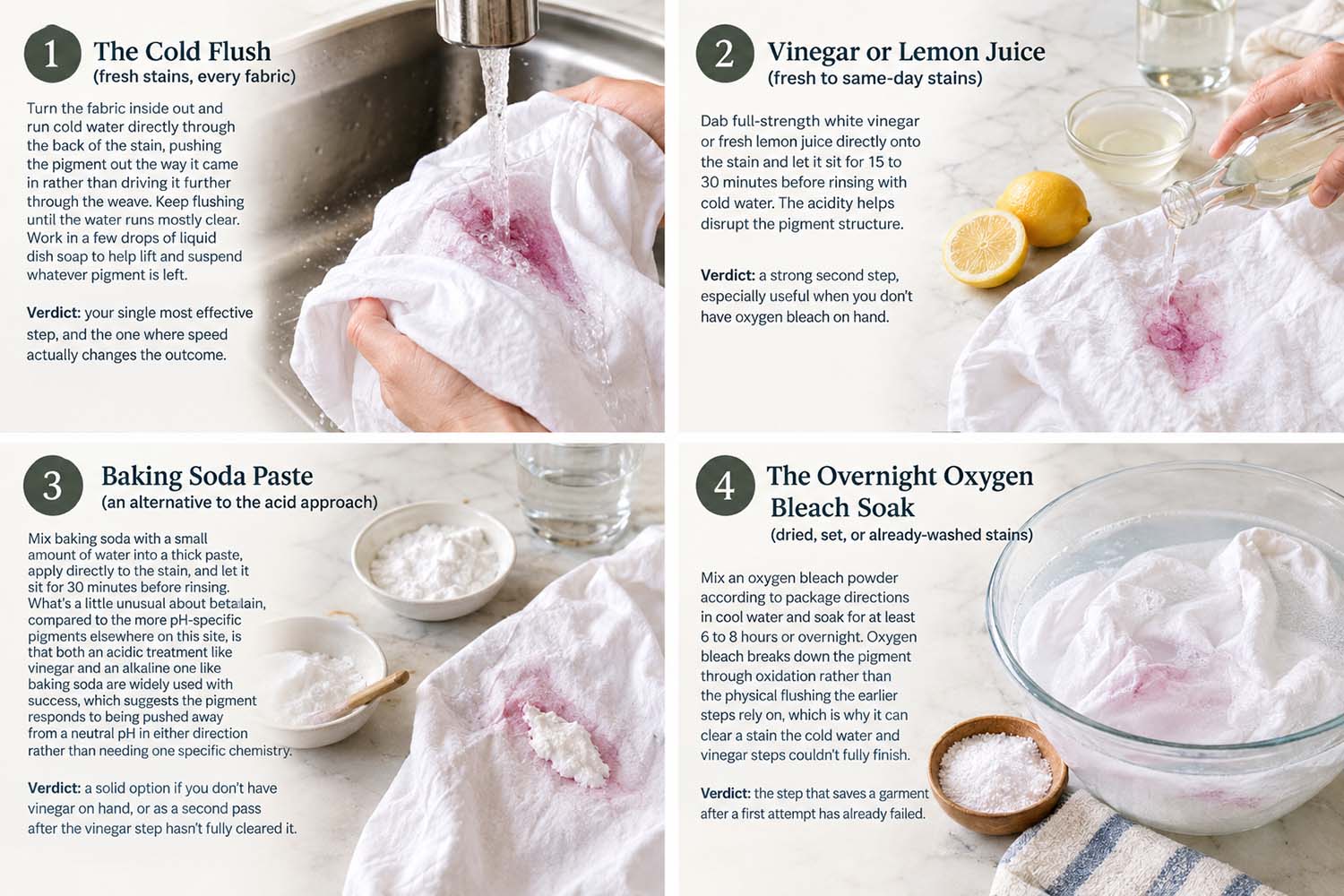
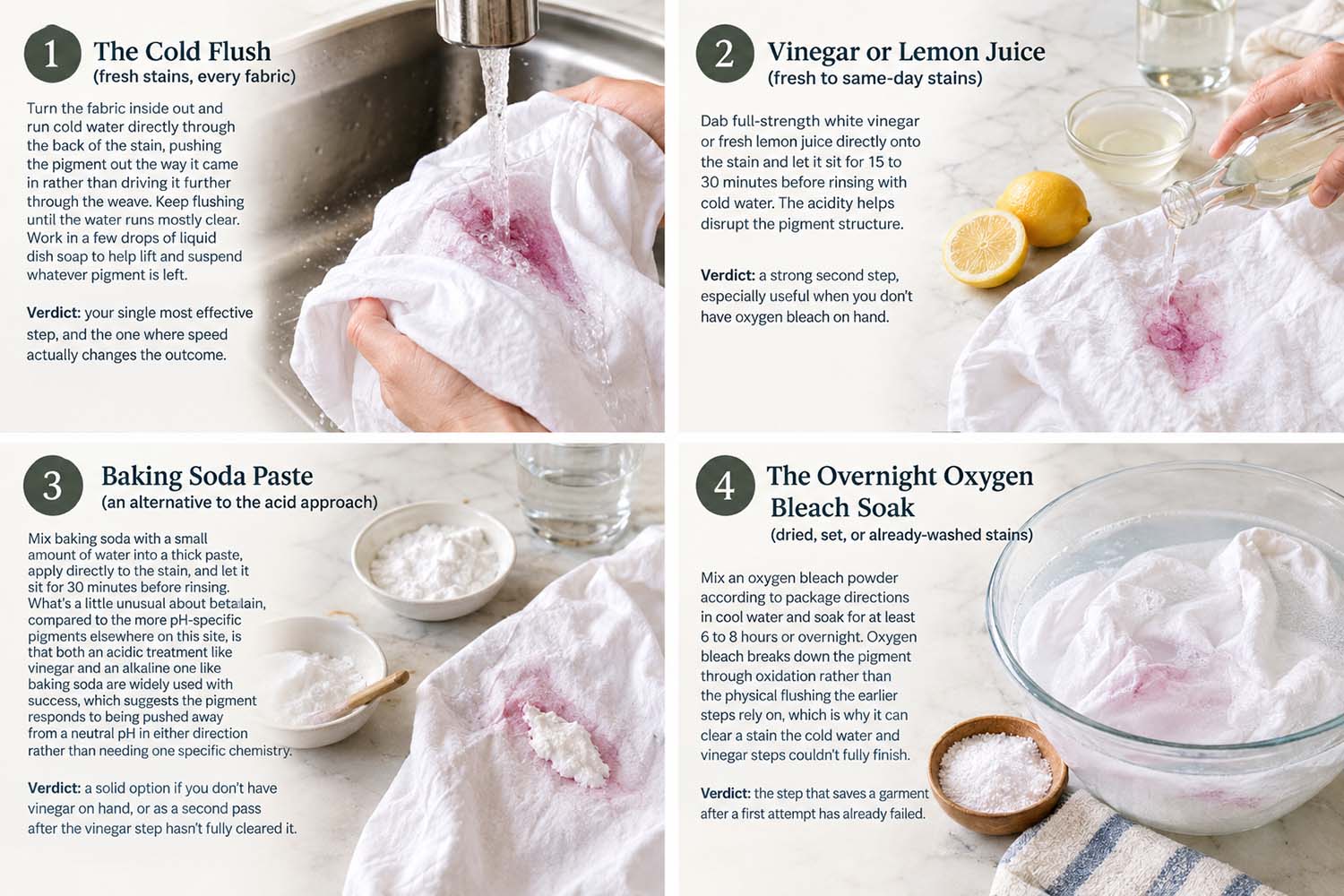
Turn the fabric inside out and run cold water directly through the back of the stain, pushing the pigment out the way it came in rather than driving it further through the weave. Keep flushing until the water runs mostly clear. Work in a few drops of liquid dish soap to help lift and suspend whatever pigment is left. Verdict: your single most effective step, and the one where speed actually changes the outcome.
2
Vinegar or Lemon Juice (fresh to same-day stains)
Dab full-strength white vinegar or fresh lemon juice directly onto the stain and let it sit for 15 to 30 minutes before rinsing with cold water. The acidity helps disrupt the pigment structure. Verdict: a strong second step, especially useful when you don’t have oxygen bleach on hand.
3
Baking Soda Paste (an alternative to the acid approach)
Mix baking soda with a small amount of water into a thick paste, apply directly to the stain, and let it sit for 30 minutes before rinsing. What’s a little unusual about betalain, compared to the more pH-specific pigments elsewhere on this site, is that both an acidic treatment like vinegar and an alkaline one like baking soda are widely used with success, which suggests the pigment responds to being pushed away from a neutral pH in either direction rather than needing one specific chemistry. Verdict: a solid option if you don’t have vinegar on hand, or as a second pass after the vinegar step hasn’t fully cleared it.
4
The Overnight Oxygen Bleach Soak (dried, set, or already-washed stains)
Mix an oxygen bleach powder according to package directions in cool water and soak for at least 6 to 8 hours or overnight. Oxygen bleach breaks down the pigment through oxidation rather than the physical flushing the earlier steps rely on, which is why it can clear a stain the cold water and vinegar steps couldn’t fully finish. An oxygen bleach powder is worth keeping on hand for exactly this kind of stubborn, already-set pigment stain. Verdict: the step that saves a garment after a first attempt has already failed.
By Fabric Type
White cotton: The most forgiving option. Cold flush, vinegar or baking soda, then an oxygen bleach soak clears nearly everything, and white cotton tolerates a longer soak than colored pieces.
Colored cotton and linen: Cotton and linen are naturally absorbent, which means they soak up the pigment-carrying moisture quickly and deeply, so treat these fabrics with real urgency. Patch test any oxygen bleach on an inside seam first.
Polyester and synthetic activewear: Less absorbent than natural fibers, so the pigment tends to stay closer to the surface and rinses out more easily with the cold flush and dish soap alone.
Silk and wool: Treat gently. Cold water flush, then a gentle dab with diluted vinegar rather than a full soak. Skip the baking soda paste here, since the abrasive texture isn’t kind to delicate fibers, and avoid wringing wool while it’s wet.
Dry-clean-only fabrics: Blot gently with a cool, damp cloth to keep the stain from spreading, and get it to a professional as soon as you can. Beet stains are time-sensitive enough that waiting even a day or two can meaningfully change the outcome.
Prevent It Before It Happens
The easiest beet stain to treat is the one that never lands. Wear an apron when you’re peeling, slicing, or juicing beets, and keep a pair of kitchen gloves nearby if you’re handling a large batch. If a splash does happen, rinsing it immediately, even a quick dab with a wet paper towel until you can get to the sink, buys you real time before the pigment has a chance to concentrate.
Step-by-Step Protocol
- Act immediately. Speed matters more here than with most other stains on this site.
- Turn the fabric inside out and flush the back of the stain under cold running water.
- Work in a few drops of liquid dish soap and rinse again.
- If color remains, apply white vinegar or lemon juice and let sit for 15 to 30 minutes.
- Rinse thoroughly and check the stain in good light.
- If any discoloration is left, or if the stain has already dried, move to an oxygen bleach soak rather than repeating the earlier steps.
- Soak in an oxygen bleach solution for at least 6 to 8 hours.
- Wash according to the care label.
- Check the area again before drying. Any remaining shadow means the dryer will lock it in.
Never do this:
- Never use hot water on a fresh or still-untreated beet stain. Most guidance on this pigment specifically warns against it, and there’s no upside to risking it when cold water works just as well for the initial flush.
- Never put the item in the dryer until you’ve confirmed the stain is completely gone.
- Never assume a regular wash cycle will finish the job on its own just because the pigment is water-soluble. Water-soluble means it moves fast, not that it disappears on its own.
- Never rub the stain. Rubbing spreads the pigment outward and drives it deeper into the weave instead of lifting it out.
- Never use chlorine bleach on colored garments. Reserve it, if at all, for sturdy white fabrics only, and reach for oxygen bleach first regardless.
- Never wait until laundry day to treat a fresh beet stain. Of everything in this cluster, this is one of the least forgiving stains to leave sitting.
What Doesn’t Work
Tossing the item straight into a regular wash without any pretreatment, the way I did with my own shirt, is the most common mistake, and it’s an easy one to make precisely because betalain sounds like it should rinse out on its own. It often doesn’t, especially once it’s had time to dry and concentrate.
Some guides recommend pouring boiling water directly through a fresh beet stain, similar to the trick sometimes used on berry stains. The reasoning is that force and heat together can flush the pigment out before it has time to set. This can work on some fresh natural pigment stains, but the results are inconsistent, it’s risky on colored or delicate fabric, and most current guidance on beets specifically still recommends cold water as the safer default. Treat it as a last resort on sturdy white cotton, not a first move.
See also
The One Thing I Wish I’d Known Sooner
I genuinely believed that shirt would be fine because the stain was, in my mind, just colored water. What I didn’t account for was how much of that water had already soaked into the fibers and evaporated away by the time I got around to washing it, leaving the pigment behind at a higher concentration than the splash that caused it. The lesson wasn’t about finding a stronger stain remover. It was about realizing that “water-soluble” was a reason to move fast, not a reason to relax.
Final Thoughts
Beet stains punish hesitation more than almost anything else in this cluster. Flush cold and fast, follow with vinegar or baking soda while it’s still fresh, and keep an oxygen bleach soak in reserve for anything that’s already dried or been through a wash. If you’re working through other plant-pigment stains, our guides on berry stains and red wine cover related but chemically distinct territory. And if you’re cooking with beets in the first place, our beet and turmeric refresher and beet pineapple granita recipes are exactly the kind of thing that leads to this stain, so keep this guide bookmarked while you’re at it. Curious what all the fuss over this vegetable is about beyond the stain risk? Our piece on the health benefits of beets covers that side of things.
FAQ
Does beet juice stain come out of clothes completely? Often, yes, especially if treated within the first few hours. Once it’s dried or been through a wash cycle, an oxygen bleach soak is usually still effective, just less certain.
Will hot water make a beet stain worse? Most guidance on beet stains specifically recommends avoiding hot water until the stain is confirmed gone, so stick with cold water for the initial treatment rather than risk it.
Does vinegar or baking soda work better on beet stains? Both are widely used with success, since betalain seems to respond to a shift away from neutral pH in either direction. Try whichever you have on hand, or layer both if the first pass doesn’t fully clear it.
Can you use chlorine bleach on beet stains? Only on sturdy white fabric, and oxygen bleach is still the better first choice, since it’s gentler on fiber strength and works well on colored garments too.
Does the boiling water trick actually work on beet stains? Sometimes, on fresh stains and sturdy white cotton, but results are inconsistent and it’s risky on colored or delicate fabric. Cold water is the safer default.
Why do beet stains seem to get darker as they dry? As the water carrying the pigment evaporates, the betalain left behind becomes more concentrated in a smaller area, which is why a stain often looks worse once it’s dried than it did the moment it happened.
Do beet stains come out of white clothes more easily than colored clothes? Generally yes, since white fabric can tolerate a longer oxygen bleach soak and, as a backup, a diluted chlorine bleach treatment that colored garments can’t safely use.
How do you get beet stains off a cutting board or countertop? For porous surfaces like wood or light-colored stone, a paste of baking soda and water or a diluted bleach solution, depending on the material, usually lifts it. For plastic, our guide on stains in plastic containers covers a similar pigment-in-porous-plastic problem.
How do you get beet stains out of carpet? Blot up any excess first, then flush the spot with cold water and a little dish soap, working from the outer edge inward. Follow with a diluted white vinegar solution if color remains, and always test on a hidden corner of the carpet first.

Better Living may earn commissions through affiliate links and may occasionally feature sponsored or partner content. If you make a purchase through our links, we may receive a small commission at no cost to you.